- Get a free quote from 5-Star reviewed Erasmuskloof painters
- Eaves, fascias and bargeboards priced per running metre — the surfaces most quotes leave out
- Rotten or delaminated boards identified before coating, not painted over
The Surfaces Everyone Forgets
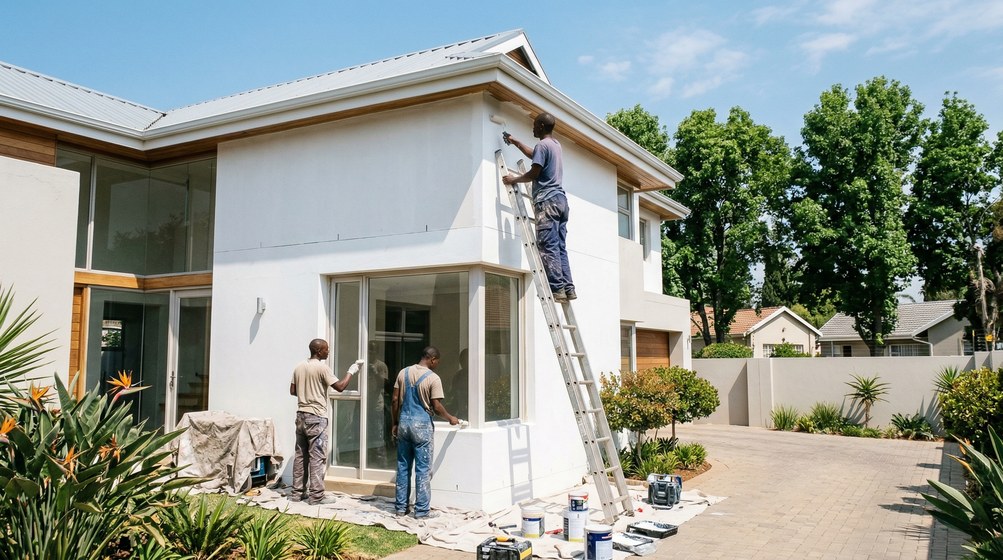
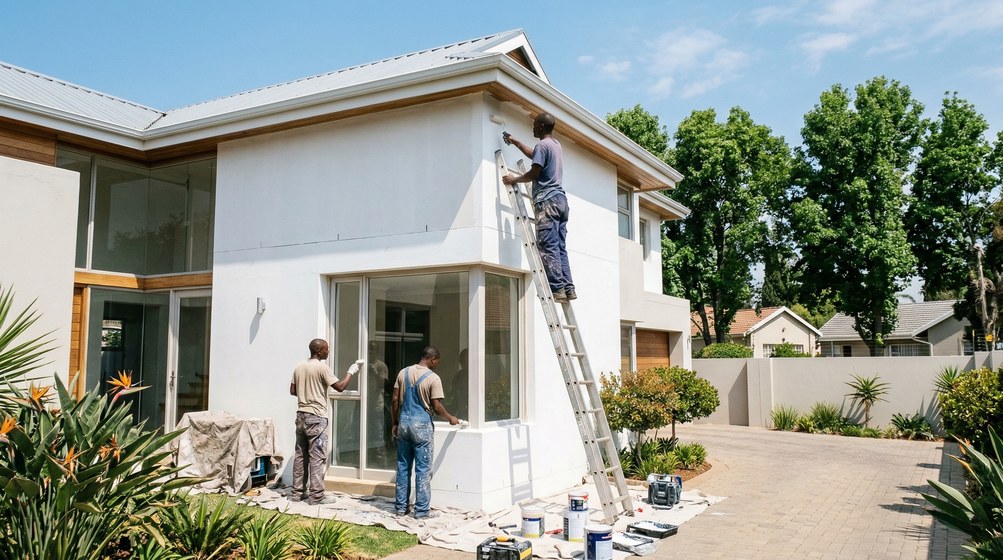
Erasmuskloof is 1970s and 1980s single-storey housing with deep overhanging eaves, timber or fibre-cement fascia boards, and bargeboards running up the gable ends. Those surfaces are almost always the first thing on the house to fail, and they are the surfaces most commonly left out of a painting quote.
The reason they fail first is exposure combined with neglect. A fascia board sits at the drip line, catching water off the roof edge and off an overflowing gutter, and it takes that wetting from above and below. Bargeboards on a gable run up the full height of the roof line, fully exposed to sun and rain with nothing overhanging them. Meanwhile the eaves soffit underneath is permanently shaded, damp and out of sight, which is where the mould grows.
By the time a homeowner is thinking about repainting, the walls usually look tired and the fascias are often actually failing — paint gone, timber greying and softening, or fibre-cement boards delaminating at the edges. Repainting the walls and skipping them is the false economy that leaves a job looking half-done from the street.
Guide Prices for Painting in Erasmuskloof
| Job | Guide price | What it covers |
|---|---|---|
| Fascia boards, prepared and coated | R120 – R230 per metre | Per running metre |
| Bargeboards, prepared and coated | R140 – R260 per metre | Per running metre, gable ends |
| Eaves soffit, incl. fungicidal treatment | R95 – R170/m² | Shaded, mould-prone surface |
| Timber board replacement | R280 – R560 per metre | Where rot is found |
| Fibre-cement board replacement | R320 – R620 per metre | Where boards have delaminated |
| Gutters, clear, repair, prime and coat | R120 – R220 per metre | Per running metre |
| Exterior walls, single-storey 3-bed | R28,000 – R48,000 | Walls only, excluding roof line |
| Interior, 3-bed | R21,000 – R36,000 | Walls, ceilings, prep and two coats |
Repair Before Coating: What to Check
Before any fascia or bargeboard is quoted for painting, someone needs to go along it and establish whether it is still sound. Coating a rotten board is money burned, and it hides the deterioration until the board fails properly.
Timber fascias and bargeboards. Press a screwdriver into the board at intervals, particularly at the ends, at joints and anywhere below a gutter joint. Sound timber resists. Soft or spongy timber has rot and the section needs replacing. Grey, fibrous, weathered surface with the grain raised means the coating has been gone long enough for the timber to start breaking down, and it needs sanding back to sound wood before priming.
Fibre-cement boards. These do not rot but they do delaminate, particularly at the cut ends and the fixing points. Look for edges splitting into layers and for cracking radiating from screw or nail holes. Delaminated sections cannot be filled successfully and need replacing.
The gutter above. Nine times out of ten a failing fascia has a gutter problem above it — blocked, sagging, joints leaking, or the fall running the wrong way. Painting the board without dealing with the gutter means doing it again in three years. On these houses gutter and fascia should be treated as one item.
Specification for Eaves and Roof-Line Timber
- Bare or sanded timber: a proper wood primer, then two coats. Do not skip the primer on exposed timber — it is what stops the topcoat being drawn unevenly into the grain and lifting at the edges
- Fascias and bargeboards: an exterior enamel or a high-quality exterior acrylic in a low sheen. Sheen sheds water and dirt better than matt on a horizontal-ish surface at the drip line
- Seal the cut ends and the top edge. This is where water gets into timber and where fibre-cement delaminates. The top edge of a fascia is invisible from the ground and is exactly where most contractors stop
- Eaves soffits: permanently shaded and damp, so use a product with a fungicidal additive. Treat existing growth with a fungicidal wash first rather than coating over it
- Gutters: clear them, check the fall, repair joints, then prime any bare metal and coat. Doing gutters and fascias together while the access is up is far cheaper than two visits
- Ventilation gaps in the soffit should not be painted closed. They are there to let the roof space breathe, and blocking them contributes to condensation problems inside the house
When to Do Roof-Line Work
The dry windows for Pretoria East are late March to May and mid-August to mid-October, and roof-line work should sit in the spring window where possible for the same reason roofs do: you want gutters cleared, fascias sound and boards sealed before the summer rainfall arrives, not after they have taken another season of overflow.
There is a practical inspection argument for looking at this in late summer, though, even if the work happens later. Watch the gutters during an actual downpour in January or February. Overflow points, sagging sections and joints that leak are obvious in heavy rain and close to invisible in dry weather. Noting where the water is going gives the contractor real information rather than a guess.
On sequencing within the job: fascias, bargeboards and gutters come before the walls. They are above the walls, and any dust, scraping debris or drips from working on them lands on the wall below. Doing the walls first means cleaning them again.
Painting Services We Cover in Erasmuskloof
Erasmuskloof Painting Questions
Painting a home in Erasmuskloof? Contact Painters Pretoria East for a free, no-obligation quote from painters who work in this area every week.
painters Erasmuskloof, fascia board painting Erasmuskloof, bargeboard painting Pretoria East, gutter painting Erasmuskloof, house painting Erasmuskloof Pretoria, painting quotes Erasmuskloof
Get a Free Quote in Erasmuskloof →5-Star Reviews
Powered by leaderr